A leaking toilet can be easy to ignore when it is only a slow trickle or a small patch of water on the floor. But even a minor leak can waste water, damage flooring and eventually become a much bigger plumbing problem.
The first step is working out where the water is coming from.
A toilet that keeps running into the bowl usually has a problem inside the cistern. Water around the base can point to a leaking connection, failed seal or cracked pan. A drip from the supply pipe or valve is a different problem again.
Knowing the symptoms can help narrow down the cause before you call a plumber.
The Toilet Keeps Running After Flushing
One of the most common toilet problems is water continuing to run after the flush should have finished.
Normally, the cistern empties into the bowl, refills to the correct level and then stops. If you can still hear hissing, trickling or water flowing into the bowl several minutes later, something inside the cistern is probably not sealing or shutting off properly.
This can happen if water is overflowing into the bowl because the cistern is filling too high.
You may also notice the toilet refilling by itself every few minutes even though nobody has used it. That usually means water is slowly escaping from the cistern into the bowl, causing the inlet valve to keep topping it up.
A running toilet does not automatically mean the whole toilet needs replacing. Often the problem is a replaceable component inside the cistern.
Water Around the Base of the Toilet
Water collecting around the bottom of the toilet needs investigation because the visible puddle does not always show you exactly where the leak started.
Possible causes include:
a leaking pan or waste connection
a failed seal
a loose or moving toilet
a cracked toilet pan
a supply-line leak running down onto the floor
water leaking from the cistern above
condensation
The timing can provide a useful clue.
If water appears mainly when or immediately after you flush, the problem may be on the drainage side of the toilet, such as the pan connection or seal.
If water appears even when the toilet has not been used, look more closely at the cistern, inlet pipe, isolation valve and other clean-water connections.
Do not keep wiping up water around the base without identifying where it is coming from. Repeated moisture can damage flooring and surrounding materials.
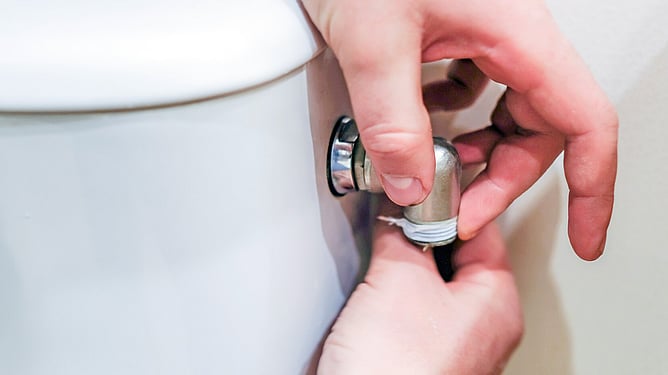
A Leaking Inlet Valve or Water Connection
The cistern needs a water supply so it can refill after every flush. That supply usually includes an isolation valve and a flexible or fixed connection into the cistern.
Over time, washers, seals, valves and connections can deteriorate or loosen.
Signs include moisture beneath the cistern or water running down the outside of the toilet. Dry the area carefully and observe where the first sign of moisture appears.
If the water is clearly coming from a supply connection rather than the toilet itself, a plumber may be able to repair or replace that component without replacing the whole toilet.
The Cistern Is Leaking
The cistern is the part of the toilet that stores the water used for flushing. A leak can occur around its fittings, seals or connections. In less common cases, the cistern itself can crack.
Look for:
water beneath or behind the cistern
moisture around bolts or fittings
fine cracks
staining below a connection
water appearing every time the cistern refills
With close-coupled toilets, water can also leak around the connection between the cistern and the toilet pan.
Because gravity carries water downward, a cistern leak can eventually create a puddle that looks as though it is coming from the base of the toilet.
That is why it is worth checking from the top down before assuming the seal underneath the toilet has failed.
The Flush Valve or Seal Is Worn
Inside the cistern, a valve seals the outlet after each flush.
If that seal becomes worn, damaged or coated with debris, water may continue escaping slowly into the bowl.
You may not see any water on the floor at all.
Instead, you might notice:
a constant trickling sound
movement on the surface of the bowl water
the cistern refilling periodically
a faint hiss from the toilet
These internal leaks are easy to miss because the water disappears down the drain.
Replacing the relevant seal or flush component can often solve the problem without replacing the toilet.
The Inlet Valve Is Not Shutting Off Properly
The inlet valve controls the water refilling the cistern. Once the correct water level is reached, the valve should close.
If it does not shut off properly, the cistern can continue filling. On many toilets, the excess water then runs through an internal overflow and into the bowl.
This creates the familiar toilet that seems to run endlessly after flushing.
The problem may involve the inlet valve itself, its washer or the float mechanism controlling the water level. Because modern cistern designs vary, the exact repair depends on the toilet.
The Toilet Pan or Cistern Is Cracked
A visible crack in the toilet pan or cistern should not be ignored.
Very small surface marks are not always structural, but a crack that is actively leaking water can worsen.
A leaking crack in the ceramic fixture generally means replacement is more appropriate than attempting a temporary patch.
A cracked toilet can also become unstable, so avoid continuing to use a toilet that is visibly damaged and moving.
Maxey Plumbing can assess whether the fault can be repaired or whether a toilet replacement is the safer long-term solution.
The Toilet Moves or Rocks
A toilet should feel stable when you sit on it. If the pan rocks or moves, that movement can place stress on the connection between the toilet and the waste pipe.
Over time, this can compromise seals or connections and lead to leaks.
Movement may be caused by loose fixings, installation issues or problems with the flooring underneath.
Simply tightening visible fixings is not always the answer. If the floor or connection is already damaged, overtightening can cause further problems.
A toilet that rocks and leaks should be properly assessed.
How Can I Work Out Where My Toilet Is Leaking?
A few simple observations can help narrow down the problem.
Ask:
Is water visible on the floor?
Does it appear only after flushing?
Can I hear water continuing to run into the bowl?
Does the cistern refill when nobody has used the toilet?
Is there moisture around the inlet pipe or isolation valve?
Is water running down from the cistern?
Does the toilet move or rock?
Can I see a crack in the pan or cistern?
Avoid dismantling the toilet if you are unsure what you are looking at.
The aim is simply to identify the symptom so a plumber can diagnose the actual fault more quickly.
When Should a Leaking Toilet Be Repaired or Replaced?
Many toilet leaks can be repaired. Replacing a valve, washer, seal or cistern component may be all that is required.
Replacement becomes more sensible when:
the ceramic pan or cistern is cracked
the toilet is very old and parts are difficult to source
several components are failing
the toilet is unstable or damaged
you already want to upgrade to a more modern water-efficient suite
Our expert plumbers can identify the fault first so you are not replacing an entire toilet when a relatively simple repair would solve the problem.
Get a Leaking Toilet Fixed Before It Gets Worse
A toilet leak is often caused by a relatively small component, but that does not mean it should be ignored.
The key is to work out whether the problem is inside the cistern, on the clean-water supply side, or around the toilet's connection to the drainage system.
If your toilet keeps running, leaks when flushed or leaves water around the base, Maxey Plumbing & Gas can diagnose the cause and determine whether a repair or replacement is appropriate.
We provide toilet repairs and replacements across Wellington City, Lower Hutt, Upper Hutt and Porirua.
Call 04 390 0135 to arrange a repair.
Frequently Asked Questions About Leaking Toilets
Why does my toilet keep running after flushing?
A toilet that keeps running after flushing usually has a problem inside the cistern. The most common causes include a worn flush valve seal, a faulty inlet valve, an incorrect water level or a flush mechanism that is not closing properly.
If the cistern continues filling too high, excess water may flow through the overflow into the toilet bowl. If you hear a constant trickle or the cistern keeps refilling itself, have the internal components checked.
Why is there water around the base of my toilet?
Water around the base can come from several places. If it appears when you flush, there may be a problem with the connection or seal between the toilet pan and the waste pipe.
Other possibilities include a cracked pan, a leaking water-supply connection or water running down from the cistern above. Dry the area and watch when the water reappears. Repeated leaking around the base should be investigated before it damages the floor.
Is a running toilet considered a leak?
Yes. Even if no water appears on the floor, water continuously escaping from the cistern into the bowl is an internal leak.
It may be less obvious than a leaking pipe, but the fault should still be repaired.
Can a leaking toilet damage the floor?
Yes. Water repeatedly leaking around the base of a toilet can soak into flooring, joins and surrounding materials. Damage may develop beneath the visible surface before it becomes obvious.
If water is appearing around the toilet after flushing, arrange an inspection rather than repeatedly drying the floor.
Why is my toilet leaking only when I flush?
A leak that appears specifically during or immediately after flushing often points to the waste side of the toilet or a connection that only carries water during the flush.
The pan connector or its seal may need attention, although water from the cistern or another connection can sometimes travel downward and create a similar symptom.
The source should be confirmed before repairs are made.
Should I stop using a toilet that is leaking at the base?
If water is leaking onto the floor when you flush, it is sensible to stop using that toilet until the cause is identified, particularly if you have another toilet available.
Water from the waste connection may not be clean, and continued use can allow more moisture into the flooring.